Holy shit! I didn’t know about this!! Well, I’ve already started digging the bunker out in the forest, so I guess some restrictions have to step in place.
1 BigUp
its very cheap to buy windows 10 keys from ebay, I usually get them for about $4-5 when i need one.
Read a tweet a few weeks ago about some guy wondering if he should start making music or not. One of the replies was super insightful - they mentioned having false starts before getting to a place where it felt enjoyable. I know I had a few false starts myself. 2017 I figured out how to work FL 12 to an extent, 2018 I had a shitty-EQ’d blend played on radio (Rinse, NTS twice and Radar once). IDK where 2019-2020 went tbh. And for more than a month I’ve been trying to get back on it and I’ve learned so much in such a short timespan.
One of my favorite 3D art people Sam Rolfes stated in an interview that it’s a lot more productive + viable to find tutorials on what to create rather than following tutorials step by step, and that applies to music as well.
Unfortunately the way my brain works is if I want to learn something, I have to sit on it for a while and get back to it. Although that’s just long term learning 
2 Likes
Your problem is that nobody uses audacity for the effects and advanced editing tools like time stretch anymore lol, so they’re gonna be prone to fucking up like that
You use reaper, if that’s the big boy daw I understand it to be there should definitely be a better way to do any audio editing stuff you need in there, and that’s much more likely to be updated to support new Mac OS’s
I also used to spend a lot of time in audacity making samples etc when I used GarageBand which had poor audio editing tools. It’s a very cumbersome way to work that really restricts making good samples. Maybe the Burial-factor of using shitty tools can bring some magic out sometimes but I think it’s bad for getting in a flow state. Certain effects also used to just stop working with updates then too lol.
1 BigUp
Yes, I could do that, but whenever I want to change the interval (1/4, 1/8 etc) this way of doing it requires an extra automation lane etc. Way easier imo to just have a “retrigger/sync” button within the LFO module than having to automate things by hand. The m4l device that I linked does exactly what I was looking for so.
Audacity is dead to me. I literally only use it for two things:
Boosting the volume level of a quiet sample then exporting as a wav so i dont have to fuck about with it in reaper everytime i use it.
And doing a quick brickwall limiter on the final master about -5 or -6db then normalizing the entire track to bring the overall volume up.
I could learn to use compressors to achieve a more polished version of the 2nd point i suppose but i find compression intimidating. Its something ive posted about many times but i just cant get my head around it.
I guess the only other use for audacity i have is doing a quick wav to mp3 export if i want smaller filesizes on something
There’s an endless amount to understand about compression but getting a functional knowledge isn’t so hard
Just learn using a compressor with some good live feedback visual metering features. Seeing when a lot of dbs are being taken off is a good visual clue to get you listening for the audible effect that matters.
Tbh I’m not even good at it, I have a muddy understanding of how to use ratio vs threshold for example. But if you just look at how much the amplitude of the signal is being pulled down, then check the attack and release to see if they play well with the envelope of the sound coming in, thats a good place to start twiddling knobs from. For reference the standard setting for compressor envelope on an average kick is around 30 ms attack and 10ms release. Varies with the kick obviously. If you’re then sending that kick on to be compressed later, like in a bus with all your drums, it should be with a compressor that has a slower attack so the first compressor’s effect can pass through the second without messing up the levels.
Compression has many other effects on sound signals but getting this right and keeping an eye on the gain levels at various stages will make your drums sound much harder and clearer
Also u might already know all this lol
2 Likes
Cheers buddy. Ive got three or four compressors with nice UX. Im visual learner so i need to watch what they do when i fiddle with them and then pick the best one for me.
My main problem is i cant hear any differences unless i start overcranking. At which point any effect is lost in the mire. Smaller changes i can’t hear so dont know if am using it correctly
Try doing that 30ms A, 10ms R setting on a kick, adjust the threshold until it takes off 2db, put the gain on +2db to make up that loss of amplitude and then turn the whole compressor on/off to listen for the effect. It’s about hearing the hard-switched A/B difference when the amplitude is hitting the same point on the channel strip output meter both with and without the compressor. If turning the compressor on and off makes it even a little louder and quieter, that’s gonna dominate your senses and make the actual compression effect much harder to perceive.
If that still seems hard try compress all your drums together with more aggressive compression and A/B that.
I couldn’t get any understanding of compression until it was broken down like this for me.
3 Likes
Thats a really simple way of putting it. Much appreciated. Gonna play this arvo
That’s fine, it’s a somewhat common technique to crank the ratio to get a more extreme effect, when you can clearly hear the compression, you can then fine tune the attack/release and then set the ratio to the desired level.
Could also lower the threshold for this, but keep in mind that the ‘action’ of the compressor might be different since different amount of signal is triggering the compressor. Ie if you had a long kick sample, the tail would probably trigger the compressor more and more as you pull the threshold down.
TL;DR crank it up, edit ADSR and shit, tone it down
2 Likes
Haha i wished all those tutes i read had said that!!
I just use the presets till I find something I like
1 BigUp
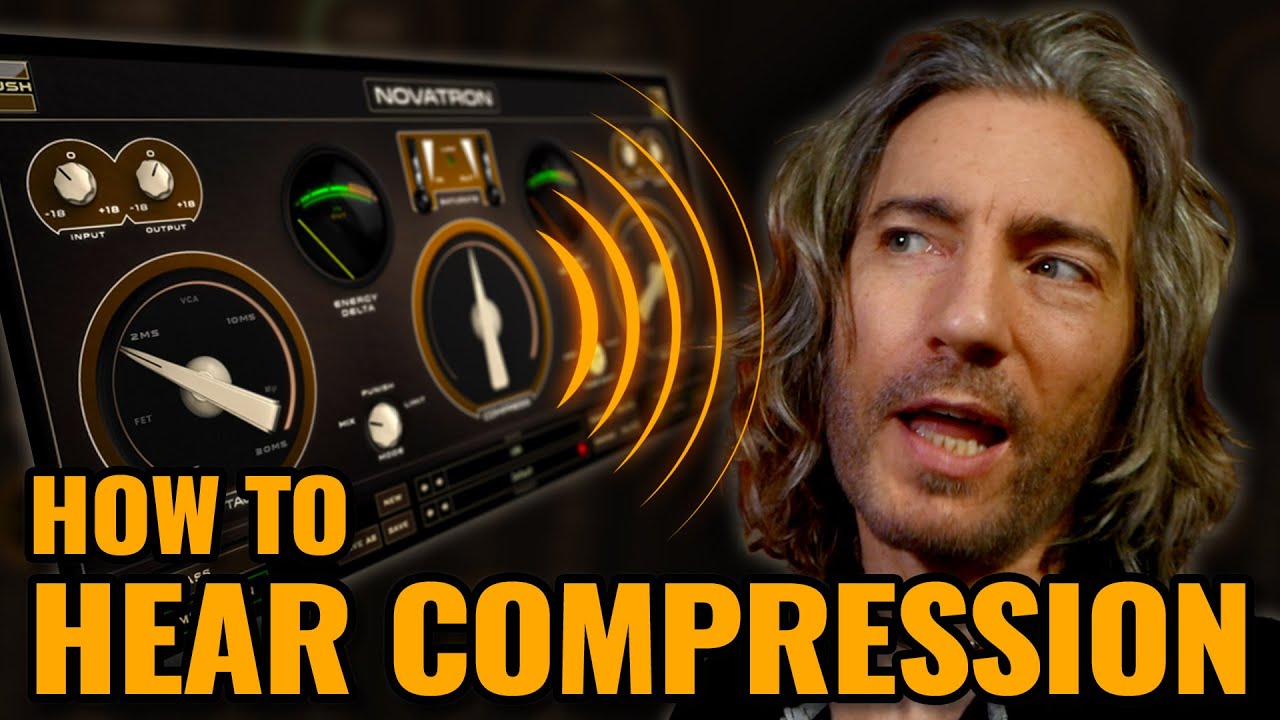
Bait title, but really nice video.
3 Likes
one of the big tips he mentions in that video (which is a great vid and you should watch start to finish) is to try listening at a bit of a lower volume than you’d expect. your ears are actually more sensitive to transients at quieter volumes,
which seems counter intuitive because usually if you can’t hear a detail you instinctively turn it up
compression is definitely a fuck around mentally at first and it took me a long while to feel comfortable with it but getting down compression and limiting is one of those particular things that felt to me like it advanced my production and mixing a lot in a short space of time.
also a big element of more “amateur” sounding mixes is everything sounding very flat and static (buss compression gives a sort of breathiness and movement that can really add a lot to a track once you get it down) and the individual elements (esp drums) having too much transient with the body/tail not being up front in a way that is evident from not using compression entirely. once you get your ears around it you start to hear it in other people’s music.
that said obviously theres risk of fucking things up with poorly executed compression and by my own admission i have imo made mistakes with it on tracks I have fully released in the past lol. so not trying to act like I’m perfect haha. getting a “perfect sounding” mix is actually wildly difficult and takes a lot of fucking experience
3 Likes
Remember the controls are backwards on the 1176.
3 Likes
yeah, never underestimate the importance of RTFM. ive gone back and realized on some plugins that I fully just missed out on a huge aspect of the functionality of some things because i hadnt taken the time to understand what all the controls actually do. or had taken a guess and been mistaken. bit different with reverb or something that you pretty much just hear what the controls do right away but especially with compressors and limiters
was about to post this hahaha
1 BigUp
just wanna add that compressors can be too slow for jungle etc - playing over a break at + 160
but you could always compress single sounds and use them afterwards
if u really, really, really want to use compression at all
i don’t agree. some are, but plenty of compressors esp. fet/1176 style but also vca comps are perfectly capable of using on jungle tempo breakbeats. you can use limiters on breakbeats too. and you can also compress the break at the original tempo and then speed it up after if you’re working with the original
also soft clipping is an underrated way of increasing percieved volume on breaks and drum hits imo. especially in combo with compression
2 Likes